
Key facts
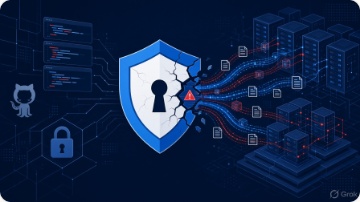
The Canadian password management company 1Password disclosed this week that an attacker compromised an employee’s corporate GitHub account, stole private source code, and deployed malicious code to its backend services to siphon off customer information. This is the core of the 1password hacked customer event.
1Password insists the data customers pay it to protect stayed out of reach. “At no time were customer vault contents accessed by, or available to, the attacker,” the company said.
What happened
The attacker reached 1Password’s continuous integration and continuous delivery (CI/CD) infrastructure. That environment holds the credentials used to keep the company’s products running. We still do not know the full scope of that access.
1Password has not explained how an employee’s GitHub account let the attacker deploy malicious code to backend services, nor has it detailed the attacker’s reach into the software build and distribution systems. The company found no internal evidence of account takeovers that used the exposed provisioning tokens.
In plain English, the attacker got far enough into the build pipeline to plant code that pulled customer data, yet the company reports the protected vaults themselves stayed closed. Think of it like someone who obtained a building pass and walked into the mail room, but never reached the locked safe where the real valuables sit.
The incident prompted 1Password to strengthen its verification codes. It replaced the previous six-digit numeric codes with ten-character alphanumeric ones so brute-force attempts become considerably harder. Our take is that the unexplained path from a single GitHub account into CI/CD remains the largest open question; until that path is described, we cannot fully judge how the backend compromise occurred or what else may have been reachable.
Who’s affected
The Canadian company disclosed this week that the attacker took private source code and placed malicious code on backend services to collect customer information.
It has rotated or revoked potentially exposed credentials. Neither its apps nor its browser extensions were affected.
The attacker also obtained tokens that appeared in emails sent to some customers during account invitations, provisioning, and recovery. Those tokens alone cannot open an account; users must still complete single sign-on or enter a verification code sent to their registered email address.
1Password notified the small number of users who had provisioning or recovery processes underway at the time. This 1password hacked customer exposure therefore centers on limited metadata and tokens rather than vault contents.
What you should do
Home users who received a direct notice from 1Password about an ongoing invitation, provisioning, or recovery process should complete only the steps in that official message. Ignore any unexpected recovery or invitation emails that arrive from other senders, and rely on the longer alphanumeric codes the company has now put in place.
IT teams should confirm that any service accounts or automation tokens previously stored in the affected environment have been rotated on their side as well. Review recent sign-in and recovery activity for accounts that use 1Password, and treat any unsolicited provisioning or recovery messages as suspect until verified through the company itself.
No additional remediation steps or patched versions have been confirmed beyond the credential rotations and code-length change already described. In the 1password hacked customer incident the precise scope of build-system access remains unstated.
Our take is that the vault contents appear to have stayed protected, yet the unexplained jump from a single GitHub account to backend code deployment leaves an open question about residual risk in the build pipeline. Watch for any further statement from 1Password that clarifies the exact access path and whether any other credentials or artifacts were involved; until then the notified users and the rotated secrets are the concrete items that need attention.
Sources: The Hacker News, The Register, SecurityWeek, BleepingComputer