
What’s new with GrapheneOS RCS
GrapheneOS has released a prototype of its RCS messaging app, giving Pixel owners greater control over their privacy while RCS messaging remains one area where it still depends on Google.
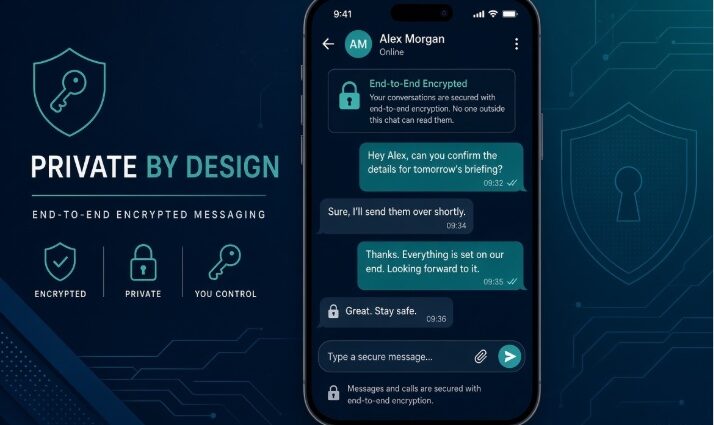
The prototype supports typing indicators, delivery and read receipts, reactions, and photo and file sharing. An official demo shows all these features in action in an end-to-end encrypted chat between a Pixel 7 Pro and a Pixel 9, with a note that Google Messages is no longer required for the conversation itself.
Phone number verification still draws on existing infrastructure, but the app won’t need Google Messages. GrapheneOS eventually wants to offer a fully standalone option for carriers that support RCS independently of Google. However, most carriers still rely on Google’s RCS infrastructure and require a token from Google Play.
At present, the GrapheneOS RCS prototype handles RCS only and still needs SMS and MMS fallback built in before it is released publicly. Digital Trends and Android Pure both reported on the prototype and its current limits.
Think of it like moving into a new apartment where the locks are yours, yet the building’s main entry still uses the original key system until every unit switches.
Who it’s for
Users currently need to install Google Messages and enable sandboxed Google Play to access the feature on GrapheneOS. The new prototype is aimed at people who want RCS messaging without relying on Google’s own Messages app.
Usually, developers build an early test version, known as a proof-of-concept, mainly to work through the technical hurdles of building the app. The idea is to let you use RCS without Google Messages, though the first version still relies on sandboxed Play services.
According to GrapheneOS, the prototype of its RCS messaging app already has end-to-end encryption with Messaging Layer Security (MLS) that is compatible with Google Messages and iOS. Its developers say they will use what they learned to integrate RCS into GrapheneOS’s built-in messaging app.
This feature work is for Pixel owners already running the privacy-focused OS who want richer messaging features while keeping Google’s footprint as small as possible. Availability remains limited to the prototype stage; no public release date or price has been announced.
Our take: The feature prototype is a practical step toward less dependence on Google’s messaging app, and we see real value for users who already accept sandboxed Play services. What to watch is whether carriers begin supporting independent RCS and how quickly SMS and MMS fallback arrives so the app can leave prototype status.
Sources: Digitaltrends, Androidpure